Skip to content
IOP Science

Applied Physics Express: Outstanding Reviewer Awards 2023

Outstanding Reviewer

Reviewer of the year: Dr Takuji Hosoi, Kwansei Gakuin University, Japan

Dr Motonobu Tomoda, Hokkaido University, Japan
Dr Masaaki Kuzuhara, Kwansei Gakuin University, Japan
Dr Hiroki Morishita, Tohoku University, Japan
Dr Kazunori Sato, Osaka University, Japan
Dr Toru Akiyama, Mie University, Japan
Dr Mitsuru Funato, Kyoto University, Japan
Dr Hiroyasu Nakayama, National Institute of Advanced Industrial Science and Technology, Japan
Dr Takafumi Kamimura, National Institute of Information and Communications Technology, Japan
Dr Srabanti Chowdhury, Stanford University, United States of America
Professor Man Hoi Wong, The Hong Kong University of Science and Technology, Hong Kong
Dr Alexander S. Urban, University of Munich, Germany
Dr Qi Wei, Nanjing Normal University, China

2D Materials: Outstanding Reviewer Awards 2023

Outstanding Reviewers

Reviewer of the year: Dr Ram Chandra Subedi, King Abdullah University of Science and Technology, Saudi Arabia

Mr Hans He, Chalmers tekniska hogskola AB, Sweden
Dr Mariana Prado, Universidade Federal de Ouro Preto, Brazil
Mr Yinong Zhang, University of Washington, United States of America
Dr Oliver Clark, Helmholtz-Zentrum Berlin fur Materialien und Energie GmbH, Germany
Professor Sachin Kumar, Indian Institute of Technology Delhi, India
Dr Jouko Nieminen, Tampereen yliopisto, Finland
Dr Alessandro Surrente, Politechnika Wroclawska, Poland
Dr Wayne Huang, Georg-August-Universitat Gottingen, Germany
Dr Jiandong Yao, Sun Yat-Sen University, China
Dr Chen Wang, University of California Los Angeles, United States of America
Professor Wei-Ting Hsu, National Tsing Hua University, Taiwan
Dr Nai Chao Hu, The University of Texas at Austin, United States of America
Dr Chengwang Niu, Forschungszentrum Julich GmbH, Germany

Dr Darren Tianye Zheng, The Hong Kong Polytechnic University, Hong Kong, SAR


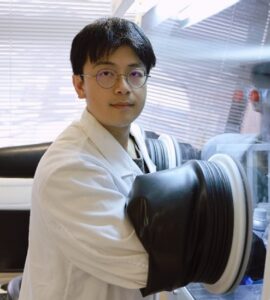
Dr Darren Tianye ZhengDr Darren Tianye Zheng is a postdoctoral researcher at the Hong Kong Polytechnic University, focusing on electrode materials of rechargeable batteries, battery health
monitoring, and real-time battery sensing. His articles Lithium aluminum alloy anodes in Li-ion rechargeable batteries: past developments, recent progress, and future prospects in Progress in Energy, and Insights into the Sodiation Kinetics of Si and Ge Anodes for Sodium-Ion Batteries in Journal of the Electrochemical Society, were published under the transformative agreement between IOP Publishing and the Hong Kong Polytechnic University.

How would you describe the process of publishing through a transformative agreement with IOP Publishing?
“Smooth” would be the first word that popped up in my head after reading this question. It makes no difference from a regular submission.

What do you think are the advantages of publishing through a transformative agreement?
There are many! The OA publishing has made the works highly visible. My review paper has been downloaded more than 2400 times after nine months, which is surprising. We also received several e-mails from experts working in the same field. From a societal perspective, as a scientist working in a public university, it is my obligation to ensure that all taxpayers in Hong Kong have the opportunity to access and benefit from my research.

Did the transformative agreement make it easier to publish open access?
Certainly! The APC is often quite expensive in my opinion as an early career researcher. I often need to seek approval from my advisor or department office to cover the OA cost prior to submission, which is often a painful process. With the TA, it is no longer a problem.

Do you have any words of advice for other authors interested in publishing open access through a transformative agreement?
I’d say go for it and be strategic in publishing your works. Maximizing the exposure of your work could be a wise step if you are at the early stage of your scientific career. In general, OA papers attract more reads, downloads, and citations.

Generative AI Tools

This policy outlines acceptable and unacceptable uses of generative artificial intelligence (GenAI), including large language models (LLMs) and AI chatbots such as ChatGPT by authors. 

Why this policy matters 

There are many responsible and appropriate uses for generative AI within scholarly research and we support authors using it in this manner. For example, they may help authors overcome language barriers or more efficiently process data. However, these tools can produce misleading or fabricated content, cannot be legally accountable for published work and lack the ability to think critically about the material they are producing.  

Additionally, uploading manuscript material to GenAI platforms may expose sensitive data to third parties, potentially breaching the rights of others involved in the work, including authors, participants, data owners and reviewers.

This policy aims to balance these considerations, safeguarding confidentiality, accuracy, and fairness while allowing transparent use of AI during the drafting of a manuscript. 

Acceptable Uses 

Authors may use generative AI tools to:

  • Edit human-written text – this includes minor corrections (checking spelling, grammar and punctuation) and more significant changes (enhancing the clarity and structure of the work). 
  • Generate text – authors must ensure that they have critically revised any AI-generated text to ensure it is accurate and free from plagiarism. 
  • Generate figures based on existing data – for example, creating a graph based on data collected during an experiment. 
  • Support literature review – generative AI tools may be used to help locate relevant publications for authors to read and draw upon in their own manuscript. 
  • Edit their responses to peer-review reports – authors may use GenAI tools only to improve the language of their responses to peer review reports. 

If authors use generative AI tools for any of the tasks listed above, they must disclose this usage in the Acknowledgements section of their manuscript. This disclosure should list the model and version of the generative AI tool and how it was used in the work. Authors are also encouraged to maintain records of previous drafts, as well as any prompts used in the editing or generation of material within their manuscript. 

All authors remain fully responsible for all material presented in their manuscript, and for ensuring its accuracy, integrity and originality. 

Unacceptable Uses 

Authors may not: 

  • Fabricate original research data or results – any data or results must have been gathered from the experiment presented in the paper. 
  • Alter or manipulate original research data or results – this includes the manipulation of images such as blots.  
  • Generate reference lists – while authors can use generative AI tools to support their literature review, all material referenced in their manuscript must have been checked by the authors to confirm that it informs and is relevant to their work. 
  • Upload reports from reviewers to generative AI tools – this may expose sensitive data to third parties, breaching reviewer rights and privacy laws. 
  • Generate responses to reviewers – it is important that authors critically engage with reviews and revise their work based on the advice of their peers. Generative AI tools cannot directly participate with the peer-review process as they lack higher-level reasoning and critical thinking. 
  • Hidden Prompts – concealing prompts for GenAI tools within a manuscript in an attempt to manipulate the peer review process will result in immediate rejection.

Authorship 

IOP Publishing follows the Committee on Publication Ethics (COPE) position statement that AI tools cannot meet the requirements for authorship as they cannot take responsibility for the submitted work. As non-legal entities, they cannot assert the presence or absence of conflicts of interest nor manage copyright and license agreements. 

Literature review 

While generative AI tools can be used to support literature review, authors should keep in mind that these tools are prone to generating false content, including references to non-existent work 

We consider the presence of references to non-existent sources to be strong evidence of irresponsible AI usage and to raise serious concerns about the validity of the work. If they are found during the submission process, this will usually result in a rejection of the submitted manuscript and potentially further sanctions. If they are discovered after publication (either in the Accepted Manuscript or Version of Record), IOP Publishing reserves the right to retract the paper due to a loss of confidence in the work. 

Administrative mistakes where references to two existing papers have been mixed-up, or where there is a typo in a reference to an existing paper, are not covered by this policy.  

Rights Protection 

Before using any AI tools, authors should carefully check the tool’s terms and conditions -especially sections about ownership, reuse, and opting out – to avoid giving away any rights over their work by accident. Authors must not use any AI tools that would limit how they, IOP Publishing, or anyone else can use their submitted work. If authors choose to use an AI tool, they must make sure that the AI tool and its provider only obtain rights that are necessary to provide the requested service, and that they do not obtain additional rights, such as the right to use the work to “train” the AI tool. 

Celebrating the impact of research published through the Swedish transformative agreement in 2024


The open access articles featured in this celebratory collection have been selected for the great impact they have achieved in such a short period of time.

From achieving high downloads and citations to receiving significant media coverage, these papers show how our TA in Sweden is increasing the visibility and impact of scientific research.

Join your fellow researchers who are shaping the future of science, and your articles could also be featured in news outlets such as National Geographic,
BBC News and ScienceDaily. Click here to read our 2023 articles.

Find out if your institution is participating in this agreement with our Journal Finder, and make sure your next paper gets the greatest exposure.

Is your institution not currently part of our BIBSAM agreement? You can recommend a transformative agreement to your librarian here.


Read the Swedish articles making an impact across our journal portfolio


Paper  |  Open Access
How understanding large language models can inform the use of ChatGPT in physics education
Giulia Polverini and Bor Gregorcic, Uppsala Universitet
2024 Eur. J. Phys. 45 025701 https://doi.org/10.1088/1361-6404/ad1420


Paper  |  Open Access
Physics-informed deep-learning applications to experimental fluid mechanics
Yuning Wang et al, Kungliga Tekniska högskolan et al
2024 Meas. Sci. Technol. 35 075303 https://doi.org/10.1088/1361-6501/ad3fd3


Paper  |  Open Access
Light fields during inflation from BOSS and future galaxy surveys
Benjamin Wallisch et al, Stockholms Universitet
2024 JCAP. 05 (2024)090 https://doi.org/10.1088/1475-7516/2024/05/090


Topical Review  |  Open Access
The duality between color and kinematics and its applications
Henrik Johansson et al, Uppsala Universitet
2024 J. Phys. A: Math. Theor. 57 333002 https://doi.org/10.1088/1751-8121/ad5fd0


Paper  |  Open Access
Metallic melt transport across castellated tiles
S. Ratynskaia et al, Kungliga Tekniska högskolan
2024 Nucl. Fusion. 64 036012 https://doi.org/10.1088/1741-4326/ad219b


Roadmap  |  Open Access
Roadmap on optical communications
Erik Agrell et al, Chalmers Tekniska Högskola
2024 J. Opt. 26 093001 https://doi.org/10.1088/2040-8986/ad261f


Paper  |  Open Access
Backreaction of axion-SU(2) dynamics during inflation
Oksana Iarygina et al, Kungliga Tekniska högskolan
2024 JCAP. 04 (2024)018 https://doi.org/10.1088/1475-7516/2024/04/018


Roadmap  |  Open Access
2024 roadmap for sustainable batteries
Patrik Johansson et al, Chalmers Tekniska Högskola
2024 J. Phys. Energy 6 041502 https://doi.org/10.1088/2515-7655/ad6bc0


Paper  |  Open Access
Deep learning-based auditory attention decoding in listeners with hearing impairment
M Asjid Tanveer et al, Lunds Universitet
2024 J. Neural Eng. 21 036022 https://doi.org/10.1088/1741-2552/ad49d7


Paper  |  Open Access
Base-Driven Ring-Opening Reactions of Vinylene Carbonate
Neeha Gogoi et al, Uppsala Universitet
2024 J. Electrochem. Soc. 171 050506 https://doi.org/10.1149/1945-7111/ad430e


Paper  |  Open Access
Inverse Gertsenshtein effect as a probe of high-frequency gravitational waves
Yutong He et al, Stockholms Universitet
2024 JCAP. 05 (2024)051 https://doi.org/10.1088/1475-7516/2024/05/051


Paper  |  Open Access
Measurement of ultrashort laser pulses with a time-dependent polarization state using the d-scan technique
Daniel Díaz Rivas et al, Lunds Universitet
2024 J. Phys. Photonics 6 015003 https://doi.org/10.1088/2515-7647/ad1c6c


Paper  |  Open Access
Remote monitoring of sleep disorder using FBG sensors and FSO transmission system enabled smart vest
Imran Aziz et al, Uppsala Universitet
2024 Eng. Res. Express. 6 025337 https://doi.org/10.1088/2631-8695/ad48da


Paper  |  Open Access
BerryEasy: a GPU enabled python package for diagnosis of nth-order and spin-resolved topology in the presence of fields and effects
Alexander C Tyner, Stockholms Universitet
2024 J. Phys.: Condens. Matter. 36 325902 https://doi.org/10.1088/1361-648X/ad475f


Paper  |  Open Access
Limitations of Polyacrylic Acid Binders When Employed in Thick LNMO Li-ion Battery Electrodes
Alma Mathew et al, Uppsala Universitet
2024 J. Electrochem. Soc. 171 020531 https://doi.org/10.1149/1945-7111/ad242b


Paper  |  Open Access
Runaway electron dynamics in ITER disruptions with shattered pellet injections
O. Vallhagen et al, Chalmers tekniska högskola
2024 Nucl. Fusion. 64 086033 https://doi.org/10.1088/1741-4326/ad54d7


Letter  |  Open Access
Power & protein—closing the ‘justice gap’ for food system transformation
Isabel Baudish et al, Stockholms Universitet
2024 Environ. Res. Lett. 19 084058 https://doi.org/10.1088/1748-9326/ad3d6f


Paper  |  Open Access
Cathodoluminescence investigations of dark-line defects in platelet-based InGaN nano-LED structures
Anders Gustafsson et al, Lunds Universitet
2024 Nanotechnology. 35 255703 https://doi.org/10.1088/1361-6528/ad33e9


Topical Review  |  Open Access
Online misinformation during extreme weather emergencies: short-term information hazard or long-term influence on climate change perceptions?
Stefan Daume, Stockholms Universitet
2024 Environ. Res. Commun. 6 022001 https://doi.org/10.1088/2515-7620/ad1b67


Paper  |  Open Access
Sensitivity and resolution response of optical flow-based background-oriented schlieren to speckle patterns
Bora O Cakir et al, Lunds Universitet
2024 Meas. Sci. Technol. 35 075201 https://doi.org/10.1088/1361-6501/ad30bd


2023 featured articles


Roadmap  |  Open Access
Roadmap for optical tweezers
Giovanni Volpe et al, Göteborgs Universitet
2023 J. Phys. Photonics 5 022501 https://doi.org/10.1088/2515-7647/acb57b


Paper  |  Open Access
ChatGPT and the frustrated Socrates
Bor Gregorcic, Uppsala Universitet and Ann-Marie Pendrill, Lunds Universitet
2023 Phys. Educ. 58 035021 https://doi.org/10.1088/1361-6552/acc299


Letter  |  Open Access
Phasing out coal for 2 °C target requires worldwide replication of most ambitious national plans despite security and fairness concerns
Vadim Vinichenko et al, Chalmers Tekniska Högskola
2023 Environ. Res. Lett. 18 014031 https://doi.org/10.1088/1748-9326/acadf6


Paper  |  Open Access
Enhancement of PIV measurements via physics-informed neural networks
Ricardo Vinuesa et al, Kungliga Tekniska Högskolan
2023 Meas. Sci. Technol. 34 044002 https://doi.org/10.1088/1361-6501/aca9eb


Paper  |  Open Access
The gyroscopic effect and moment of inertia
Åke Fäldt, Chalmers Tekniska Högskola and Tobias Fredlund, Högskolan i Gävle
2023 Phys. Educ. 58 025001 https://doi.org/10.1088/1361-6552/aca73a


Paper  |  Open Access
Strong perpendicular anisotropic ferromagnet Fe3GeTe2/graphene van der Waals heterostructure
Bing Zhao et al, Chalmers Tekniska Högskola
2023 J. Phys. D: Appl. Phys. 56 094001 https://doi.org/10.1088/1361-6463/acb801


Letter  |  Open Access
Canopy responses of Swedish primary and secondary forests to the 2018 drought
Julika Wolf et al, Lunds Universitet
2023 Environ. Res. Lett. 18 064044 https://doi.org/10.1088/1748-9326/acd6a8


Letter  |  Open Access
Historical diffusion of nuclear, wind and solar power in different national contexts: implications for climate mitigation pathways
Vadim Vinichenko et al, Chalmers Tekniska Högskola
2023 Environ. Res. Lett. 18 094066 https://doi.org/10.1088/1748-9326/acf47a


Paper  |  Open Access
Accelerating a car from rest: friction, power and forces
Andreas Isacsson et al, Chalmers Tekniska Högskola
2023 Phys. Educ. 58 055005 https://doi.org/10.1088/1361-6552/ace1c7


Letter  |  Open Access
Persistent anomalies of the North Atlantic jet stream and associated surface extremes over Europe
Vera Melinda Galfi and Gabriele Messori, Uppsala Universitet
2023 Environ. Res. Lett. 18 024017 https://doi.org/10.1088/1748-9326/acaedf


Paper  |  Open Access
Ageing of High Energy Density Automotive Li-Ion Batteries: The Effect of Temperature and State-of-Charge
Anastasiia Mikheenkova et al, Uppsala Universitet
2023 J. Electrochem. Soc. 170 080503 https://doi.org/10.1149/1945-7111/aceb8f


Roadmap  |  Open Access
2023 Roadmap on molecular modelling of electrochemical energy materials
Chao Zhang et al, Uppsala Universitet
2023 J. Phys. Energy 5 041501 https://doi.org/10.1088/2515-7655/acfe9b


Letter  |  Open Access
Substantial carbon sequestration by peatlands in temperate areas revealed by InSAR
Behshid Khodaei et al, Lunds Universitet
2023 Environ. Res. Lett. 18 044012 https://doi.org/10.1088/1748-9326/acc194


Paper  |  Open Access
Competing Ethylene Carbonate Reactions on Carbon Electrode in Li-Ion Batteries
Robin Lundström et al, Uppsala Universitet
2023 J. Electrochem. Soc. 170 040516 https://doi.org/10.1149/1945-7111/accb6e


Paper  |  Open Access
Participatory pathways to the Sustainable Development Goals: inviting divergent perspectives through a cross-scale systems approach
David Collste et al, Stockholms Universitet
2023 Environ. Res. Commun. 5 055014 https://doi.org/10.1088/2515-7620/acce25


Paper  |  Open Access
Synchrotron XPS and Electrochemical Study of Aging Effect on Passive Film of Ni Alloys
Josefin Eidhagen et al, Kungliga Tekniska Högskolan
2023 J. Electrochem. Soc. 170 021506 https://doi.org/10.1149/1945-7111/acba4b


Paper  |  Open Access
Modular 3D printed platform for fluidically connected human brain organoid culture
Jessica Giacomon and Janko Kajtez et al, Lunds Universitet
2024 Biofabrication 16 015014 https://doi.org/10.1088/1758-5090/ad0c2c


Paper  |  Open Access
MXene/poly(ionic liquid) porous composite membranes for systematized solar-driven interfacial steam generation
Atefeh Khorsand Kheirabad et al, Stockholms Universitet
2023 2D Mater. 10 024008 https://doi.org/10.1088/2053-1583/acc415


Paper  |  Open Access
PTsymmetry-protected exceptional cones and analogue Hawking radiation
Marcus Stålhammar et al, Stockholms Universitet
2023 New J. Phys. 25 043012 https://doi.org/10.1088/1367-2630/acc6e5


Paper  |  Open Access
High power impulse magnetron sputtering of tungsten: a comparison of experimental and modelling results
Jon Tomas Gudmundsson et al, Kungliga Tekniska Högskolan
2023 Plasma Sources Sci. Technol. 32 034003 https://doi.org/10.1088/1361-6595/acc12f


Researchers from Lebanon

IOP Publishing (IOP) has a transformative agreement with American University of Beirut to enable a transition to open access publishing.

Who can benefit?
All corresponding authors that are current staff members, researchers (permanent, temporary and visiting), or students at American University of Beirut at the point of submission, can publish open access at no cost to themselves. The corresponding author is the person listed as Corresponding Author at the time of submission, and is the person responsible for communicating with the journal during the peer review and publication process.

What’s included?

  • Articles accepted will be eligible for transformative agreement funding to enable authors to publish open access with no cost to themselves
  • Research paper, Focus Collection, letter and review article types
  • Included journals are those in lists A, B, C and D. Click here for a full title list of eligible journals.

Please note
You may find our author guide for submitting under a transformative agreement helpful located in our Transformative Agreement hub

Researchers from Macau

IOP Publishing (IOP) has a transformative agreement with the University of Macau to enable a transition to open access publishing.

Who can benefit?
All corresponding authors that are current staff members, researchers (permanent, temporary and visiting), or students at the University of Macau at the point of submission, can publish open access at no cost to themselves. The corresponding author is the person listed as Corresponding Author at the time of submission, and is the person responsible for communicating with the journal during the peer review and publication process.

What’s included?

  • Articles accepted will be eligible for transformative agreement funding to enable authors to publish open access with no cost to themselves
  • Research paper, Focus Collection, letter and review article types
  • Included journals are those in lists A, B, C and D in the title list of eligible journals

Please note
You may find our author guide for submitting under a transformative agreement helpful located in our Transformative Agreement hub.
For more information, please contact your relevant library contact at your university.

Is your institution not listed here? Recommend open access funding to your library.

Researchers from Saudi Arabia

IOP Publishing (IOP) has a transformative agreement with two institutions in Saudi Arabia to enable a transition to open access publishing.

“As pioneers in open access publishing, KAUST Library have signed a number of transformative agreements and continues to excel in this field. With the new unlimited IOPP 3-year deal, we’ve reached a new milestone on our open access publishing journey which provides wider recognition and greater impact of KAUST research.”
Nora Alshibani, KAUST Library Director

Who can benefit?
All corresponding authors that are current staff members, researchers (permanent, temporary and visiting), or students at one of the institutions below at the point of submission, can publish open access at no cost to themselves. The corresponding author is the person listed as Corresponding Author at the time of submission, and is the person responsible for communicating with the journal during the peer review and publication process.

What’s included?

  • Articles accepted will be eligible for transformative agreement funding to enable authors to publish open access with no cost to themselves
  • Research paper, Focus Collection, letter and review article types
  • Included journals are those in lists A, B, C and D. Click here for a full title list of eligible journals.

Please note
You may find our author guide for submitting under a transformative agreement helpful located in our Transformative Agreement hub. For more information, please contact your relevant library contact at your university.

Eligible institutions
King Abdullah University of Science and Technology (KAUST)
King Abdulaziz University (KAU)

Researchers from Taiwan

IOP Publishing (IOP) has a transformative agreement with a number of institutions in Taiwan to enable a transition to open access publishing.

Who can benefit?
All corresponding authors that are current staff members, researchers (permanent, temporary and visiting), or students at one of the institutions below at the point of submission, can publish open access at no cost to themselves. The corresponding author is the person listed as Corresponding Author at the time of submission, and is the person responsible for communicating with the journal during the peer review and publication process.

What’s included?

  • Articles accepted will be eligible for transformative agreement funding to enable authors to publish open access with no cost to themselves
  • Research paper, Focus Collection, letter and review article types
  • Included journals are dependent on your eligible institution, please see the below list for details. Click here for a full title list of eligible journals.

Please note

You may find our author guide for submitting under a transformative agreement helpful located in our Transformative Agreement hub.

For more information, please contact your relevant library contact at your university, or stma@mx.nthu.edu.tw. You can also visit the Physics Research Promotion Center.

Eligible Journals List A, B, C and D

National Chin-Yi University of Technology
National Taipei University of Technology* (8 articles per year accepted from the 1st of January)

Physics Research Promotion Center:
• Academia Sinica
• Chung Yuan Christian University
• National Central University
• National Changhua University of Education
• National Cheng Kung University
• National Chengchi University
• National Chung Cheng University
• National Chung Hsing University
• National Dong Hwa University
• National Sun Yat-sen University
• National Synchrotron Radiation Research Center
• National Taiwan Normal University
• National Taiwan Ocean University
• National Taiwan University
• National Taiwan University of Science & Technology
• National Tsing Hua University
• National Yang Ming Chiao Tung University
• Soochow University
• Tamkang University
• Tunghai University

Taipei Medical University

Is your institution not listed here? Recommend open access funding to your library.

Researchers from Japan

IOP Publishing (IOP) has a transformative agreement with two institutions in Japan to enable a transition to open access publishing.

Who can benefit?
All corresponding authors that are current staff members, researchers (permanent, temporary and visiting), or students at one of the institutions below at the point of submission, can publish open access at no cost to themselves. The corresponding author is the person listed as Corresponding Author at the time of submission, and is the person responsible for communicating with the journal during the peer review and publication process.

What’s included?

  • Articles accepted will be eligible for transformative agreement funding to enable authors to publish open access with no cost to themselves
  • Research paper, Focus Collection, letter and review article types
  • Included journals are dependent on your eligible institution, please see the below list for details. Click here for a full title list of eligible journals.

Please note
Funding is subject to librarian funding approval at acceptance stage. If for any reason funding is declined, the author(s) will have the opportunity to revert to subscription publication type at zero cost to themselves or the member institution.

Eligible Journals List A, B, and C

Institute Of Physical And Chemical Research (RIKEN) * 
Japan Atomic Energy Agency (JAEA)*
National Institute of Advanced Industrial Science & Technology (AIST)*

Eligible Journals List A, B, C and D
Okinawa Institute of Science and Technology* 
Toyota Central Research & Development Laboratories*

You may find our author guide for submitting under a transformative agreement helpful located in our Transformative Agreement hub. For more information, please contact your relevant library contact at your university.

*there is a limited number of articles per calendar year